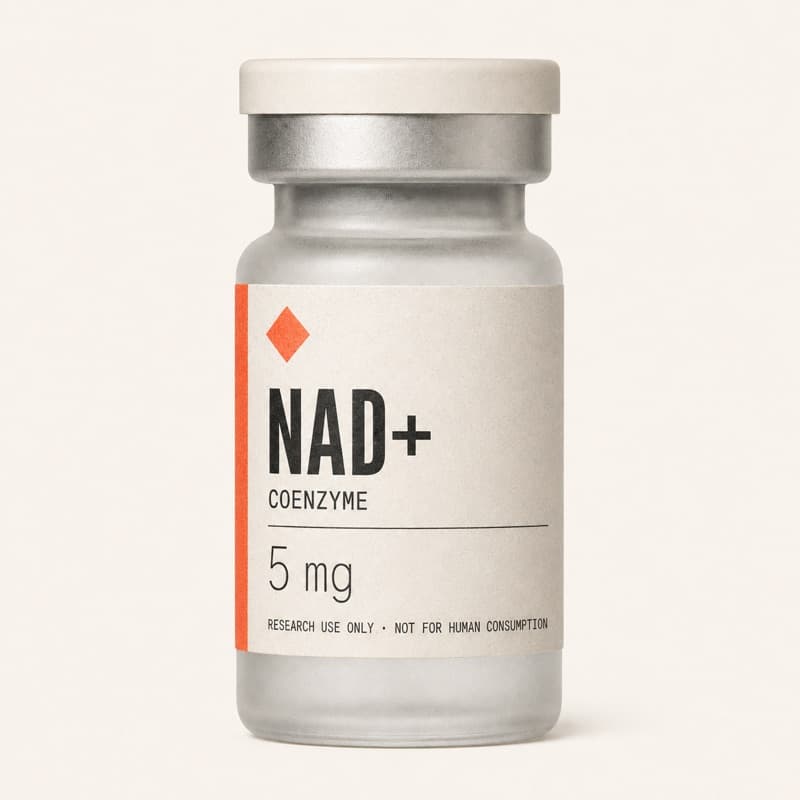
NAD+
Essential Cellular Coenzyme & Anti-Aging Therapy · Nicotinamide adenine dinucleotide
Coenzyme present in every cell, crucial, with roles in cellular maintenance and the generation of energy; its level declines naturally as age advances. Several delivery methods exist for supplementation, which may support health at the cellular level, lift energy, sharpen cognitive function, and promote longevity.
Overview
Coenzyme present in every cell, crucial, with roles in cellular maintenance and the generation of energy; its level declines naturally as age advances. Several delivery methods exist for supplementation, which may support health at the cellular level, lift energy, sharpen cognitive function, and promote longevity.
Direct bloodstream delivery secures maximum cellular availability: energy production by way of ATP synthesis, DNA repair through PARP activation, longevity pathways mediated by sirtuins. Mitochondrial function and metabolic homeostasis are supported.
Research indications
What the compound has been studied for, grouped by body system. Effect size is the reported magnitude where it was measured — not a recommendation.
Restoration of NAD+ levels serves optimal ATP synthesis
Glucose and fat metabolism are enhanced
Oxygen utilization and endurance improve
PARP enzymes are activated, for genomic stability
Supports longevity pathways
May assist in clearing senescent cells
Mental clarity and focus improve
Neuronal health and function are supported
- Class
- Coenzyme
- Research status
- Extensively studied
- Molecular weight
- 663.43 Da
- Half-life
- ~2.5 h
- Typical dose
- IV: 250–1000 mg; IM/subcutaneous: 100–500 mg; intranasal: 25–50 mg; oral precursors: 100–500 mg NMN/NR
- Frequency
- IV: 1–2 times weekly; IM/subcutaneous: 2–3 times weekly; intranasal: 1–2 times daily; oral: daily
- Cycle length
- 4–12 weeks
- Storage
- Refrigerate at 2-8°C; protect from light
Molecular data
- Type
- Coenzyme
- Molecular weight
- 663.43 Da
- Half-life
- 150 min
Levels in single-dose multiples. A shape, not a pharmacokinetic prediction.
Dosing reference
Doses reported in the literature and by suppliers. These are a record of what has been used in research — reference, never instruction.
| Context | Route | Amount | Frequency |
|---|---|---|---|
| IV Infusion | Intravenous | 250-1000mg | 1-2x weekly |
| IM/SubQ | Intramuscular or Subcutaneous | 100-500mg | 2-3x weekly |
| Precursor supplementation | Oral capsule | 100-500mg NMN or NR | Daily |
| Cognitive support | Intranasal | 25-50mg | 1-2x daily |
Interactions
More cellular repair, more energy production
Tissue regeneration effects complement
The metabolic pathways GLP-1 agonists enhance are supported
Improved energy metabolism benefits growth hormone pathways
Effects on recovery and anti-aging are enhanced
NAD+ levels and effectiveness are significantly reduced by alcohol
What to expect
Safety
- Temporary nausea
- Mild flushing while the IV infuses
- Unusual fatigue or weakness
- Nausea or gastrointestinal distress that persists
- Severe reactions where injected, or infection signs
- Allergic reaction with rash, swelling, or breathing difficulty
- Medical supervision is required for IV administration
- No alcohol during treatment
- Dosing schedule kept consistent
Quality checklist
What to confirm before trusting a batch of research material. A verification aid — not an endorsement of any supplier.
- Third-party Certificate of AnalysisIndependent lab · dated · lot-matched.
- HPLC purity ≥ 98%Reverse-phase trace included.
- Mass-spec confirms 663.43 g/molMALDI-TOF or ESI-MS.
- Counterion stated (acetate ≫ TFA)TFA salts can confound bioassays.
- Endotoxin / sterility statementRelevant once reconstituted.
- Lyophilised · cold-chain shippedStored −20 °C, shipped on ice.
- Labelled “research use only”No therapeutic or dosing claims.
Recorded signals for this compound · 7
- ✓Sterile injection technique
- ✓Solution clear and colorless (injectable)
- ✓Refrigerated properly at 2-8°C
- ✓Purity tested by a third party
- !Reconstituted solution used inside 28 days
- ×Contamination is indicated by cloudiness or discoloration of the solution
- ×Stored at room temperature, NAD+ degrades rapidly
FAQ
What is the case for injecting NAD+ rather than taking it as a pill?
Oral NAD+ precursors (NMN, NR) exist and absorb better than direct NAD+, but injectable forms reach 100% bioavailability with immediate cellular uptake. The digestive system is bypassed entirely by IV NAD+, which suits rapid energy restoration and cases where delivery has to be guaranteed.
What is the duration of the energy benefits from NAD+?
On IV NAD+, energy improvements typically show up inside the first 1–2 weeks. The benefits then build: by weeks 9–12, metabolic function is optimized and energy sustained. Oral precursors take longer, weeks 5–8 and beyond, but give continuous support on daily use.
Does NAD+ reduce aging, or only produce a feeling of more energy?
Aging mechanisms are addressed directly: sirtuins (the longevity enzymes) are activated and DNA repair is supported through PARP activation. It is no fountain of youth, though — what it optimizes is cellular maintenance. Alongside healthy habits, NAD+ may help with appearance and age-related decline, with results varying between individuals.
References
- 1NAD+ and Sirtuins in Aging and DiseaseImai, S., Guarente, L. · Trends in Cell Biology · 2014
Seminal review establishing that NAD+ decline is central to aging, driving defects in sirtuin-mediated nuclear and mitochondrial functions and resulting in age-associated pathologies.
ReviewPubMed 24786309 ↗ - 2Chronic Nicotinamide Riboside Supplementation Is Well-Tolerated and Elevates NAD+ in Healthy Middle-Aged and Older AdultsMartens, C.R., et al. · Nature Communications · 2018
Randomized crossover trial showing NR (1000 mg/day for 6 weeks) is well tolerated and effectively elevates NAD+ in healthy middle-aged and older adults, with preliminary evidence for reduced blood pressure and arterial stiffness.
Human RCTPubMed 29599478 ↗ - 3Nicotinamide Mononucleotide Increases Muscle Insulin Sensitivity in Prediabetic WomenYoshino, M., et al. · Science · 2021
First human clinical trial showing NMN (250 mg/day for 10 weeks) increases skeletal muscle insulin signaling and sensitivity in overweight/obese postmenopausal women with prediabetes.
Human RCTPubMed 33888596 ↗ - 4NAD+ Metabolism and Its Roles in Cellular Processes During AgeingCovarrubias, A.J., et al. · Nature Reviews Molecular Cell Biology · 2021
Comprehensive review of NAD+ metabolism during aging, detailing how senescent cells drive NAD+ decline via CD38+ macrophage activation and outlining therapeutic restoration strategies.
ReviewPubMed 33353981 ↗ - 5Efficacy of Oral NMN Supplementation on Glucose and Lipid Metabolism: A Systematic Review with Meta-Analysis of RCTsZhong, O., et al. · Journal of Translational Medicine · 2024
Meta-analysis of 8 RCTs (342 adults) found NMN significantly elevates blood NAD+ levels, but short-term supplementation (250-2000 mg/d) did not show significant improvements in glucose control or lipid profile in the general population.
Meta-analysisPubMed 39116016 ↗ - 6A Randomized Placebo-Controlled Trial of Nicotinamide Riboside in Older Adults with Mild Cognitive ImpairmentOrr, M.E., et al. · GeroScience · 2024
NR was well tolerated and significantly increased blood NAD+ concentrations in older adults with MCI. Global methylation analyses indicated modest NR-associated reduction in epigenetic age by PhenoAge and GrimAge clocks.
Human RCTPubMed 37994989 ↗
A randomised, double-blind, placebo-controlled trial gave nicotinamide riboside at 2000 mg daily to 58 participants with long COVID, tracking NAD+ concentrations, fatigue, cognition, sleep quality and mood across 24 weeks.
A double-blind randomised crossover trial reported benefit from nicotinamide riboside in Werner syndrome, an inherited disorder of accelerated ageing.
A meta-analysis in adults aged over 60 found that NMN and NR supplementation raised NAD+ without consistently improving skeletal muscle mass or physical function.